STOCKHOLM, July 27, 2026 /PRNewswire/ -- The largest battery energy storage system (BESS) project in the Nordics in Ånge, Sweden has now been taken into commercial operation. Sungrow, a global leader in battery storage and PV inverters, delivered its utility BESS PowerTitan 2.0 for the 70 MW / 160 MWh battery system developed by Delta Capacity. Designed to deliver high reliability and efficiency, the system is built to operate under challenging Nordic weather conditions and extreme temperature variations.
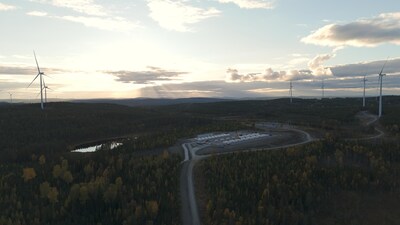
The Ånge BESS will contribute to balancing Sweden's power system, offering rapid response capabilities and capacity for both frequency regulation and arbitrage across the volatile Nordic power market. Sweden's battery storage market is expanding rapidly as the country's energy transition accelerates. The regulatory framework has enabled battery storage to participate in balancing markets, turning it into a revenue-generating asset, according to a report from SolarPower Europe. Sweden and Finland together installed more than 1 GWh of new battery capacity in 2025[1].
"Ånge is a great example of how large-scale energy storage is built in practice. Fast, at the right scale, and with the right partners like Delta Capacity. Our role is to be a long-term partner and contribute to expanding renewable energy capacity in Sweden," says Samer Nameer, Country Manager Sweden at Sungrow.
Fast deployment for the Nordic energy transition
The Ånge project is owned by a joint venture between WOOD & Company Renewables Sub-Fund and Delta Capacity, which has led the project from design to completion. From procurement start to commercial operation took 15 months. The facility is located in bidding zone SE2 and contributes to balancing the Swedish power system.
Patrik Hes, CEO of Delta Capacity: "The Nordic energy transition is moving fast and requires infrastructure that keeps the same pace. Sweden has great renewable resources, but flexibility is missing and that is exactly what Ånge provides. 160 MWh of storage, delivered in 15 months. Delta Capacity's goal is to keep building faster and at a greater scale. The energy transition cannot wait."
The project was acquired from RES in February 2025. Other suppliers in the project are Stenger & Ibsen Construction, Rejlers, Green Power Monitor, Solvina and Ellevio. Centrica Energy manages the buying and selling of electricity for the facility around the clock.
Local presence with a global footprint
Sungrow Europe currently has 25 local offices, two research and development centres and 26 warehouses across Europe. The Swedish team with dedicated experts for Services, and energy solutions is based in Stockholm, with other Scandinavian offices in Malmö, Copenhagen and Helsinki. Among its most recent projects in the Nordic region are the Nordic region's largest solar roof in Sweden[2] (14 MW) and the northernmost solar project in Finland[3] (70 MW)."
About Sungrow
Sungrow, a global leader in renewable energy technology, has pioneered sustainable power solutions for over 29 years. As of Dec 2025, Sungrow has installed over 1000 GW of power electronic converters worldwide. The company is recognized as the world's most bankable PV inverter and energy storage company (BloombergNEF). Its innovations power clean energy projects across the globe, supported by a network of 520 service outlets guaranteeing excellent customer experiences. At Sungrow, we're committed to bridging to a sustainable future through cutting-edge technology and unparalleled service. For more information, please visit: www.sungrowpower.com/en
About Delta Capacity
Founded in 2022, Swiss-based Delta Capacity is driven by its vision to develop, acquire, and own and operate utility-scale battery storage across Europe. The company is scaling quickly while maintaining a consistent focus on asset quality—prioritizing designs that support high availability, efficient performance, and bankable operating outcomes. The rapidly growing team brings decades of experience across large infrastructure, renewable energy, energy trading, and software development. Delta Capacity currently has nearly 800 MWh under construction and targets the build-out, commissioning, and operation of more than 6 GWh of flexible assets by 2030.

Photo - https://mma.prnewswire.com/media/3007864/Sungrow_Delta_AngeBESS.jpg
Logo - https://mma.prnewswire.com/media/1344575/Logo.jpg
 View original content:https://www.prnewswire.co.uk/news-releases/sungrow-powers-the-nordics-largest-commissioned-bess-project-in-sweden-with-powertitan-2-302835061.html

Die Schweizer Stimmberechtigten haben einer Verschärfung des Zivildienstgesetzes zugestimmt. Laut definitiven Ergebnissen votierten 52,5 Prozent für die Reform, rund 47,5 Prozent dagegen. Damit setzte sich der Kurs von Bundesrat und Parlament durch, den Zivildienst wieder klar als Ausnahme und nicht als gleichwertige Alternative zum obligatorischen Militärdienst zu definieren. Die Stimmbeteiligung lag mit rund 58 Prozent vergleichsweise hoch; 1'690'343 Personen legten ein Ja in die Urne, 1'531'878 stimmten Nein.
Das Ergebnis offenbart deutliche regionale Bruchlinien. Während viele deutschsprachige Kantone die Reform klar unterstützten – etwa Aargau mit 56,2 Prozent, St. Gallen mit 58,9 Prozent, Graubünden mit 59,3 Prozent und Luzern mit 56,9 Prozent Ja – fiel das Verdikt in der Romandie gespalten aus. Genf, Waadt, Neuenburg und Jura lehnten die Vorlage ab, mit Nein-Anteilen von bis zu gut 60 Prozent im Jura. Basel-Stadt stellte sich ebenfalls gegen die Verschärfung, und der Kanton Zürich kippte nach Auszählung der städtischen Stimmen knapp ins Nein-Lager. Demgegenüber sagten Wallis (57,1 Prozent), Freiburg (50,2 Prozent) und das Tessin (53,9 Prozent) Ja zur Reform.
Kern der Vorlage ist ein Paket von sechs Massnahmen, die den Wechsel aus der Armee in den Zivildienst deutlich unattraktiver machen sollen. Künftig müssen alle, die in den Zivildienst wechseln, mindestens 150 Diensttage leisten – unabhängig davon, wie viele Tage im Militär noch offen wären. Für Unteroffiziere und Offiziere gilt damit neu derselbe Umrechnungsfaktor von 1,5 Zivildiensttagen pro verbleibendem Militärdiensttag wie für einfache Soldaten. Wer alle Armee-Ausbildungstage bereits absolviert hat, kann künftig nicht mehr in den Zivildienst wechseln, um der Schiesspflicht zu entgehen.
Zusätzlich werden der zeitliche Rahmen und die Einsatzmöglichkeiten enger gezogen. Zivildienstleistende müssen ab dem Jahr nach ihrem ersten Einsatz jährlich Dienst leisten, bis alle vorgeschriebenen Tage erfüllt sind. Wer vor oder während der Rekrutenschule ein Gesuch stellt, muss den langen Anfangseinsatz von 180 Tagen bereits im Jahr nach der Zulassung absolvieren. Einsätze, die ein begonnenes Medizinstudium voraussetzen, werden gestrichen – offiziell, weil der Armee medizinisches Personal fehlt. Bürgerliche Parteien werteten das Ja als Bestätigung, dass der Zivildienst eine Ausnahme bleiben solle; die links-grüne Nein-Allianz verweist angesichts des knappen Resultats auf die breite gesellschaftliche Unterstützung für den Zivildienst und kündigt an, weitere Verschärfungen bekämpfen zu wollen.