Producer of the Paranormal Activity and Insidious franchises teams with AI-native studio Secret Level and Artlist AI Platform for the first union-compliant AI-powered feature film
TEL AVIV, Israel, May 27, 2026 /PRNewswire/ -- In a major milestone at the inflection point of filmmaking and technology, Artlist, the leading AI production platform, has officially signed its first full-length feature film: Terrarium, a hybrid horror feature financed and produced by Artlist alongside legendary genre producer Steven Schneider and pioneering AI-native studio Secret Level.
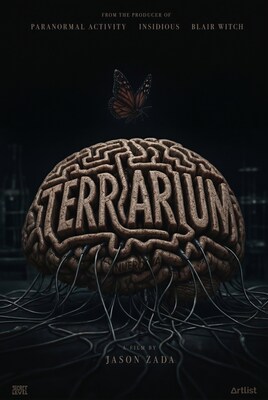
Schneider, the producer behind iconic horror franchises including Paranormal Activity and Insidious, anchors a project that signals one of the most significant moves yet by establishing Hollywood into the next generation of production. Terrarium also marks a reunion between Schneider and Jason Zada, who previously collaborated on the genre film The Houses October Built.
Terrarium, which is currently in production, is written and directed by Emmy-winning filmmaker Jason Zada (The Forest, Focus Features). The film is produced by Christina Lee Storm (Nate Parker's Newborn, Jurassic Punk) for Secret Level.
The high-concept horror project represents a bold leap forward in the evolution of entertainment production: a hybrid production where AI-powered tools and traditional filmmaking craftsmanship work hand in hand, in a fully DGA and SAG-AFTRA-compliant workflow. At the center of the partnership is the integration of the Artlist AI platform directly into Secret Level's proprietary AI filmmaking pipeline, supporting a large-scale, cinema-grade production designed for feature-length storytelling.
"What drew me to Terrarium was Jason. He has a rare ability to make audiences experience something they can't explain, something that stays with them long after the lights come on. With Terrarium he's pushing into completely new territory. The way he's making this film is unlike anything I've been a part of in twenty years of genre filmmaking." - Steven Schneider
"This partnership is an incredible milestone not only for Artlist, but for the future of filmmaking itself," said Artlist Co-Founder and Co-CEO Ira Belsky. "Terrarium is proof that AI can enhance the creative process in ways that empower artists, directors, designers, and storytellers to dream bigger and execute at an entirely new level. This is about expanding creative possibilities and not replacing human imagination."
Artlist will serve as financier and Executive Producer on the film, marking the company's official entry into feature filmmaking and further cementing its role at the intersection of technology, entertainment, and creative innovation. Terrarium is in active pre-production.
About Artlist
Artlist is the leading creative AI technology platform powering the next era of video production. Artlist empowers creators, teams, and studios to achieve high-end production through a secure, professional-grade ecosystem. By combining cutting-edge generative AI for video, image, music, and voiceover with a world-class catalog of stock assets, Artlist provides the tools and workflows to scale confidently, trusted by over 50 million creators and global brands, including Google, Amazon, and Microsoft. For more information, visit artlist.io.
About Secret Level
Secret Level is the leading AI-native entertainment studio, merging proprietary AI-powered technology with world-class storytelling. With divisions spanning brand campaigns, Hollywood narrative and long-form, and interactivity, Secret Level develops original IP, co-produces with major studios, and delivers globally recognized creative for partners like Coca-Cola, Google, and Kalshi. https://www.secretlevel.co
Photo: https://mma.prnewswire.com/media/2988776/AI_Hybrid_Feature_Film_Terrarium.jpg
Contact:
Ravit Shimony
PR and Communications Manager, Artlist
pr@artlist.io
 View original content:https://www.prnewswire.co.uk/news-releases/artlist-and-secret-level-partner-with-legendary-horror-producer-steven-schneider-for-landmark-ai-hybrid-feature-film-terrarium-302783268.html

Die Schweizer Stimmberechtigten haben einer Verschärfung des Zivildienstgesetzes zugestimmt. Laut definitiven Ergebnissen votierten 52,5 Prozent für die Reform, rund 47,5 Prozent dagegen. Damit setzte sich der Kurs von Bundesrat und Parlament durch, den Zivildienst wieder klar als Ausnahme und nicht als gleichwertige Alternative zum obligatorischen Militärdienst zu definieren. Die Stimmbeteiligung lag mit rund 58 Prozent vergleichsweise hoch; 1'690'343 Personen legten ein Ja in die Urne, 1'531'878 stimmten Nein.
Das Ergebnis offenbart deutliche regionale Bruchlinien. Während viele deutschsprachige Kantone die Reform klar unterstützten – etwa Aargau mit 56,2 Prozent, St. Gallen mit 58,9 Prozent, Graubünden mit 59,3 Prozent und Luzern mit 56,9 Prozent Ja – fiel das Verdikt in der Romandie gespalten aus. Genf, Waadt, Neuenburg und Jura lehnten die Vorlage ab, mit Nein-Anteilen von bis zu gut 60 Prozent im Jura. Basel-Stadt stellte sich ebenfalls gegen die Verschärfung, und der Kanton Zürich kippte nach Auszählung der städtischen Stimmen knapp ins Nein-Lager. Demgegenüber sagten Wallis (57,1 Prozent), Freiburg (50,2 Prozent) und das Tessin (53,9 Prozent) Ja zur Reform.
Kern der Vorlage ist ein Paket von sechs Massnahmen, die den Wechsel aus der Armee in den Zivildienst deutlich unattraktiver machen sollen. Künftig müssen alle, die in den Zivildienst wechseln, mindestens 150 Diensttage leisten – unabhängig davon, wie viele Tage im Militär noch offen wären. Für Unteroffiziere und Offiziere gilt damit neu derselbe Umrechnungsfaktor von 1,5 Zivildiensttagen pro verbleibendem Militärdiensttag wie für einfache Soldaten. Wer alle Armee-Ausbildungstage bereits absolviert hat, kann künftig nicht mehr in den Zivildienst wechseln, um der Schiesspflicht zu entgehen.
Zusätzlich werden der zeitliche Rahmen und die Einsatzmöglichkeiten enger gezogen. Zivildienstleistende müssen ab dem Jahr nach ihrem ersten Einsatz jährlich Dienst leisten, bis alle vorgeschriebenen Tage erfüllt sind. Wer vor oder während der Rekrutenschule ein Gesuch stellt, muss den langen Anfangseinsatz von 180 Tagen bereits im Jahr nach der Zulassung absolvieren. Einsätze, die ein begonnenes Medizinstudium voraussetzen, werden gestrichen – offiziell, weil der Armee medizinisches Personal fehlt. Bürgerliche Parteien werteten das Ja als Bestätigung, dass der Zivildienst eine Ausnahme bleiben solle; die links-grüne Nein-Allianz verweist angesichts des knappen Resultats auf die breite gesellschaftliche Unterstützung für den Zivildienst und kündigt an, weitere Verschärfungen bekämpfen zu wollen.