MILFORD, Mass., June 8, 2026 /PRNewswire/ -- 55th International Symposium on High Performance Liquid Phase Separations and Related Techniques—Waters Corporation (NYSE: WAT) today announced the launch of the BioResolve™ Peptide and GTxResolve™ Lipid Phenyl-Hexyl+ and C18+ Columns, a first-of-its-kind reversed-phase (RP) column platform designed to tackle a persistent biopharmaceutical challenge: reliably separating structurally and chemically similar impurities in GLP-1 peptides, insulin, and lipid nanoparticles (LNPs) to support the development of safe, effective drug products.
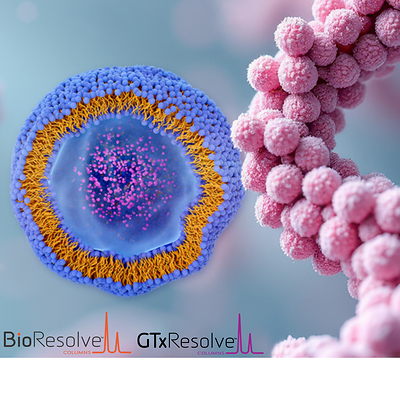

In GLP-1 receptor agonists and newer mRNA-based therapies such as in vivo CAR T, difficulty resolving impurities can delay time to market, weaken regulatory confidence, and affect patient safety. Traditional RP columns do not always separate low-level or closely related impurities well, often requiring longer analyses, detector-suppressing mobile-phase additives, or repeated method redevelopment. BioResolve Peptide and GTxResolve Lipid Columns help to overcome these limitations with ready-to-use methods that improve both resolution1,2 and speed2,3 while fitting into existing workflows.
"We have made simultaneous advances in both chemistry and particle physics to deliver the first columns Waters has introduced to market specifically QC batch-tested for GLP‑1 analysis4 and lipid nanoparticles,2 solving a longstanding customer pain point," said Erin Chambers, Vice President, General Manager, Consumables & Lab Automation, Waters Analytical Sciences, Waters Corporation. "BioResolve Peptide and GTxResolve Lipid Columns are designed to resolve chemically similar GLP‑1 impurities and LNP components faster when speed matters,2,3 and with extraordinary resolution1 when certainty is required. The result is simpler method development, regulatory‑ready data,5 and faster, highly reproducible methods, ultimately helping to reduce cost burdens on important new therapeutics."
BioResolve Peptide and GTxResolve Lipid Columns use specially designed surface chemistries and superficially porous particles to deliver precise RP separations with selectivity for two difficult sample types. Available in Phenyl-Hexyl+ and C18+ chemistries with 230 Å pore size particles, they are designed to support efficient mass transfer, consistent performance across U(H)PLC and HPLC systems, and reliable, batch-tested results5 from early-stage research through manufacturing.
GLP-1 peptides are especially challenging to analyze because many impurities differ by just one atom, while others have no difference in atomic composition and vary only in how their atoms are arranged spatially. BioResolve Peptide Phenyl-Hexyl+ and C18+ Columns are built to resolve these difficult impurities, with specialized 300 mm formats available when maximum separation performance and deeper impurity characterization are required.
"The BioResolve Peptide RP Columns have performed exceptionally well, showing outstanding resolution between our peptide therapeutics and related impurities," said Ashish Kanhed, Group Leader, Alembic Pharmaceuticals. "We are highly impressed with their quality and look forward to continuing to use them for our complex GLP-1 and peptide separations. By discriminating critical impurities at speed with a mass spectrometry-based QC approach, we can now satisfy present and future regulatory requirements in one run for faster, more confident answers on molecular purity."
For LNP and lipid workflows, the charged surface of GTxResolve Columns helps sharpen peaks for ionizable lipids by reducing tailing. Their larger pore size makes it easier for a wide range of lipid molecules to move through the column, improving peak shape and resolving challenging co-elutions. In addition, the superficially porous particle design speeds the movement of molecules through the stationary phase, shortening run times without reducing selectivity.2
"GTxResolve Lipid RP Columns have demonstrated strong performance for lipid quantitation and impurity analysis, with reduced run times and excellent peak shape," said Adam Kowalczyk, Research Scientist II, Analytical Development, Acuitas Therapeutics. "The ability to tune separations for specific lipid components, combined with compatibility across multiple detector platforms (UV, MS, ELSD, and CAD), provides significant flexibility for characterization of diverse lipid species. In particular, we have observed a separation of ionizable lipids that has not previously been achieved."
Waters' BioResolve Peptide and GTxResolve Lipid Columns will be available globally beginning June 9, 2026, starting with the 1.6 µm Phenyl-Hexyl+ phase. For more information, please visit waters.com/BioResolve and waters.com/GTx.
Additional Resources:
Waters, BioResolve, GTxResolve, and Empower are trademarks of Waters Corporation or its affiliates. All other trademarks are the property of their respective owners.
About Waters Corporation:
Waters Corporation (NYSE: WAT) is a global leader in life sciences and diagnostics, dedicated to accelerating the benefits of pioneering science through analytical technologies, informatics, and services. With a focus on regulated, high-volume testing environments, our innovative portfolio harnesses deep scientific expertise across chemistry, physics, and biology. We collaborate with customers around the world to advance the release of effective, high-quality medicines, ensure the safety of food and water, and drive better patient outcomes by detecting diseases earlier, managing routine infections, and combating antibiotic resistance. Through a shared culture of relentless innovation, our passionate team of approximately 16,000 colleagues turn scientific challenges into breakthroughs that improve lives worldwide. For more information, please visit www.waters.com/about.
References:
Contact:
Molly Gluck
Head of External Communications
Waters Corporation
508.498.9732
molly_gluck@waters.com
 View original content to download multimedia:https://www.prnewswire.co.uk/news-releases/waters-launches-industry-first-reversed-phase-bioseparation-columns-to-deliver-up-to-3x-faster-glp-1-characterization-and-2x-faster-lnp-component-analysis-302793693.html

Der Auftritt von Donald Trump Jr. an einem privaten Wirtschaftstreffen in Zürich beschäftigt nun die Schweizer Politik – und die Steuerzahler. Für den Sicherheitsaufwand rund um den Besuch des Sohns des US-Präsidenten kommt nicht die Veranstalterin Davos Lodge auf, sondern der Bund. Die Stadtpolizei Zürich bestätigt, sie habe auf Anweisung des Bundesamts für Polizei Fedpol gehandelt und den gesamten Polizeieinsatz dem Bund in Rechnung gestellt. Damit werden die Kosten über den Bundeshaushalt von Steuerzahlerinnen und Steuerzahlern in der ganzen Schweiz getragen.
Trump Jr. war Anfang Juni im Zunfthaus zur Saffran vor einer exklusiven Runde von rund 70 bis 75 Gästen aus Wirtschaft und Politik aufgetreten, organisiert von der Netzwerkplattform Davos Lodge. Das Treffen fand unter Ausschluss der Öffentlichkeit statt, im Anschluss war ein privates Dinner vorgesehen. Rund um den Anlass wurden in der Zürcher Innenstadt zeitweise Strassen gesperrt und Trams blockiert, ein grösseres Aufgebot von Bundes- und Stadtpolizisten stand neben dem US Secret Service im Einsatz. Zur genauen Höhe der Kosten schweigen sowohl Fedpol als auch Stadtpolizei mit Verweis auf Sicherheitsüberlegungen.
Brisant ist der Fall, weil es sich um ein rein privates Treffen ohne offiziellen Staatsbesuch oder öffentliches Amt des Gastes handelte. Grundsätzlich sieht die Verordnung über den Schutz von Personen und Gebäuden in Bundesverantwortung vor, dass Private die Kosten für Schutzmassnahmen selbst tragen müssen, wenn sie schutzbedürftige Personen einladen. Fedpol beruft sich hier jedoch auf Ausnahmeregelungen: Zum einen jene Bestimmung, wonach auch Personen ohne völkerrechtlichen Status geschützt werden können, «bei denen allerdings der Schutz notwendig ist, damit dem Ansehen der Schweiz nicht geschadet wird». Zum anderen verweist das Amt auf die Möglichkeit einer Abgeltung durch den Bund, wenn ein Anlass eine herausragende Bedeutung und weitreichende Auswirkungen auf die internationalen und wirtschaftlichen Interessen der Schweiz habe. Wie diese Kriterien im konkreten Fall erfüllt sein sollen, kommentiert Fedpol nicht; zu Lagebeurteilungen und Sicherheitsdispositiven äussere man sich «aus taktischen Gründen nicht».
Die Intransparenz sorgt in Zürich für ein politisches Nachspiel. Drei Gemeinderatsmitglieder der SP haben eine Anfrage eingereicht, die insbesondere Klarheit über die Kosten und die Entscheidungsgrundlagen des Bundes einfordern soll. Auch die Veranstalterin Davos Lodge beantwortete die Frage nach einer Beteiligung an den Sicherheitskosten nicht direkt und verwies lediglich darauf, man arbeite im Einklang mit den geltenden Schweizer Vorschriften und stimme sich mit den Behörden ab. Während Insider von sechsstelligen Beträgen für den Zugang zum Netzwerk-Event berichten, bleiben die öffentlichen Kosten des Polizeiaufgebots vorerst unter Verschluss.