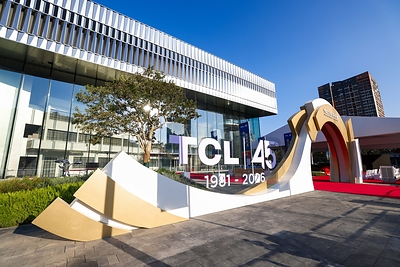
Built on the site where TCL's journey began in 1981, the museum chronicles 45 years of innovation, transformation, and industrial progress while looking ahead to the brand's next chapter.
HUIZHOU, China, Sept. 28, 2026 /PRNewswire/ -- TCL today marked its 45th anniversary with the Inauguration Ceremony of the TCL Industrial Museum in Huizhou, the city where TCL was founded in 1981. Built on the former factory site of TCL's predecessor, TTK, the museum chronicles TCL's evolution alongside the development of China's electronics industry.
"The TCL Industrial Museum is not only about preserving the journey behind us, but also about inspiring the journey ahead," said Li Dongsheng, Founder and Chairman of TCL. "Over the past 45 years, TCL has grown through entrepreneurship, transformation and innovation. As we enter a new chapter, we will carry forward the same boldness and commitment to create new possibilities for the future."
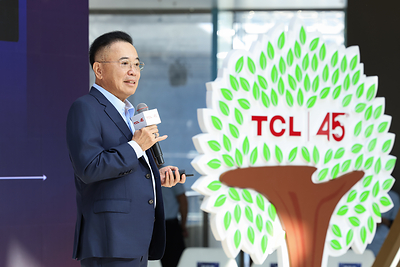
45 Years of Innovation and Transformation
Spanning more than 23,000 square meters, including over 9,000 square meters of exhibition space, the museum brings together over 3,000 curated pieces across six exhibition halls and a central atrium.
The collections cover key eras of technological development, with highlights including a 1920s Nipkow mechanical scanning disk, China's first television set, China's first commercial computer, and the world's first mass-produced printed OLED 4K display developed by TCL CSOT in 2024. The television gallery also features more than 100 vintage television sets from around the world.
Strategic Focus Powers Global Growth
Beyond preserving products and historical milestones, the museum shows how TCL has successfully adapted its business strategy over the years as industries, technologies, and markets have evolved. One of the most consequential turning points came in 2019.
In 2019, TCL completed a major restructuring that established TCL Technology and TCL Industries as two independently operated entities. With TCL Technology focusing on display and new energy businesses, and TCL Industries specializing in smart devices and services, the restructuring has enabled each business to strengthen its strategic focus and unlock greater growth potential. From 2019 to 2025, TCL Technology's revenue more than tripled from approximately US$8.4 billion to US$27 billion, while TCL Industries' revenue more than doubled from US$11.7 billion to approximately US$24.9 billion.
Alongside revenue growth, the restructuring has also strengthened TCL's position across its core businesses. TCL TV ranked No. 2 globally by shipment volume in 2025. According to Omdia, TCL CSOT ranked No. 2 globally in overall TV panel market share that year. In clean energy, TCL Zhonghuan is the world's largest producer of solar-grade silicon crystals and a key supplier in the global silicon wafer market. Beyond pure business performance, TCL's broader progress was also recognized in 2026, when it was named one of TIME's World's Best Companies.
The Next Chapter: Technology Leadership with Purpose
With the museum sharing the journey that brought TCL to where it is today, the brand is now looking to the future with a series of initiatives. As a Worldwide Olympic and Paralympic Partner, TCL is connecting people with technology through one of the world's most universal cultural platforms, while TCLArt, TCLforHer, TCLGreen, and TCLYoung are extending the brand's engagement across culture, society, and sustainability.
At 45, the boldness and commitment that have shaped TCL's story remain central to its future. TCL will continue advancing its technology, sustainable growth and global brand-building efforts, while strengthening its role as a responsible corporate citizen and trusted technology brand.
About TCL
Founded in 1981, TCL is dedicated to empowering smarter, healthier lifestyles through next-generation experiences. Operating through two independent entities, TCL Industries and TCL Technology, TCL delivers innovative solutions spanning TVs, smartphones, audio products, smart home devices, display technologies, and clean energy.
Today, with 50 R&D centers and 47 manufacturing bases globally, TCL operates in over 160 countries and regions, reinforcing its position as a globally competitive smart technology brand. To further inspire greatness, TCL has become an official Worldwide Olympic and Paralympic Partner in the Home Audiovisual Equipment and Home Appliances category.
 View original content to download multimedia:https://www.prnewswire.co.uk/news-releases/tcl-marks-45th-anniversary-with-inauguration-of-the-tcl-industrial-museum-302891580.html

Das Schweizer Studio Urban Games bringt seine erfolgreiche Verkehrssimulation in die nächste Runde: Transport Fever 3 ist ab sofort erhältlich – erstmals auch in einer Version für macOS. Spielerinnen und Spieler bauen darin über mehr als 125 Jahre Transportgeschichte hinweg ein eigenes Verkehrs- und Logistikimperium auf, von den ersten Pferdekutschen und Dampflokomotiven bis hin zu modernen Düsenjets, Supertankern, Hochgeschwindigkeitszügen und Helikoptern. Der Titel setzt damit die Tradition von Genre-Klassikern wie Transport Tycoon fort und positioniert sich erneut als Konkurrenz zu Städten-Simulationen wie Cities: Skylines, allerdings mit klarem Fokus auf Transport und industrielle Verknüpfungen.
Auf dem Mac richtet sich Transport Fever 3 klar an Besitzer aktueller Hardware. Urban Games verlangt mindestens einen M2‑Pro‑Chip, 16 Gigabyte Arbeitsspeicher, 90 Gigabyte freien Speicherplatz und macOS Sequoia 15. Empfohlen wird ein M4 Pro oder besser mit mindestens 24 Gigabyte RAM. Vertrieben wird das Spiel über Steam und GOG, die Einstiegsversion kostet ab 49,99 Euro. Ob zusätzlich eine Veröffentlichung im Mac App Store geplant ist, ist noch offen. Die Simulation bietet eine deutschsprachige Benutzeroberfläche und Vertonung; Videoeinblicke in das Spiel stellt der Entwickler auf YouTube bereit.
Inhaltlich bleibt Transport Fever 3 dem Kern des Genres treu, vertieft aber die Komplexität. Spieler verbinden Städte und Industrie-Standorte, organisieren Linien für Busse, Straßenbahnen, Lkw, Eisenbahnen, Schiffe, Flugzeuge und Helikopter und optimieren so den Transport von Personen und Gütern. Einnahmen generieren alle Transporte, doch zugleich steigen mit jedem Fahrzeug und jeder neuen Strecke die laufenden Kosten. Zusätzlich müssen mehrstufige Produktionsketten bedacht werden: Rohstoffe wie Holz gelangen zunächst ins Sägewerk, bevor sie als weiterverarbeitetes Produkt in die Städte geliefert werden. Fehler in der Planung oder ungenaue Umsetzung können dazu führen, dass sich Systeme gegenseitig blockieren – etwa bei langen Verbindungen über mehrere Kilometer oder im dicht getakteten innerstädtischen Verkehr.
Transport Fever 3 adressiert diese Komplexität mit einem stärker geführten Einstieg und Szenarien. Eine Einführung erläutert Schritt für Schritt grundlegende Mechaniken wie Straßenbau, Linienplanung und Fahrzeugkauf. Spezielle Szenarien führen anschließend in kompakter Form durch komplexere Zusammenhänge und setzen auf abgeschlossene, erzählerisch eingebettete Aufgaben – etwa wenn eine Stadt für einen Großanlass wie Mardi Gras vorbereitet oder ein Dorf bei der wirtschaftlichen Entwicklung unterstützt werden soll. Das Spiel legt dabei Wert auf Detailsteuerung bis hin zu Ampelphasen an Kreuzungen und erlaubt es, ein fein verzweigtes Netz aufzubauen, in dem erfahrene Spieler jede Linie und jeden Zug kennen. Besitzer von Transport Fever 2 erhalten beim Kauf der Standard- oder Deluxe-Edition auf derselben Plattform einen Treuerabatt von 10 Prozent – ein Angebot, das die bestehende Community in die neue Version mitnehmen soll.