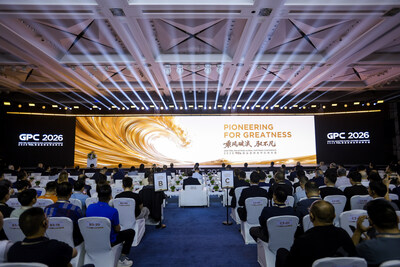
SHENZHEN, China, April 21, 2026 /PRNewswire/ -- TCL, a global leader in consumer electronics and the world's No. 1 Mini LED and ultra-large TV brand[1], today hosted the 2026 TCL Industries Global Partners Conference (GPC 2026) in Shenzhen. Held under the theme "Pioneering for Greatness," the biennial gathering brought together nearly 500 key accounts, strategic partners, and industry leaders from 49 markets to review two years of sustained growth, while exploring the next wave of innovation and reinforcing a shared commitment to long-term collaboration.
Against a background of accelerating industry transformation and global market shifts, TCL Industries also outlined its strategic vision to continue to work with global partners to lead with brand value, improve efficiencies in its global operations, and build a smarter, and more connected ecosystem for consumers worldwide.
Building value through innovation and product excellence
At GPC 2026, TCL Industries shared the latest roadmap, technology innovations, and product and channel strategies designed to take the company and its partners towards this vision of the future.
On site at the conference was an extensive showcase of product innovations leading the way to a new generation of smart living:
From establishing entirely new display technologies to developing more convenient and intuitive smart devices, the products showcase how TCL Industries continues to redefine the standards across a broad range of product categories through product excellence. In particular, the company's ongoing success in the mid-to-high-end market is the result of major investments in user-centric R&D that focus on developing innovations to address real consumer needs. Centered on innovations in display quality, AI, and energy performance, TCL Industries has invested significantly in R&D over the past three years, resulting in the global leadership in a number of key technologies. TCL was the first company to introduce and mass produce Mini LED technology and continues to maintain its position at the forefront of high-end display technology through innovations like SQD-Mini LEDs.
Further to this, in March 2026, TCL Electronics Holdings Limited and Sony Corporation announced a legally binding definitive agreement for a strategic partnership in home entertainment. Under a newly-established joint venture, the companies will collaborate to create innovative products that meet the expectations of customers worldwide and achieve further business growth through outstanding operational excellence.
TCL's strategic push into the mid-to-high-end segment has delivered strong results for the company. On a category basis, TCL maintained its position as the world's number two TV brand[2] and the world's number two exporter of air conditioners[3], with shipments of the latter reaching 20 million units. The company also recorded its sixteenth consecutive year as the world's largest exporter of refrigerators in 2025[4].
In addition to these traditional strongholds, TCL continues to make headways into emerging segments. In Q3 2025, TCL was the top brand worldwide in terms of AR smart glass shipments[5], while revenue for photovoltaic products rose 63.6% in 2025[6].
Consumer-first localization spurs global growth
Behind TCL's sustained global growth is an expansion strategy that emphasizes effective localization through the creation of local value chains and investment in local resources. Today, the company operates a highly integrated vertical supply chain, including 25 R&D centers, 7 joint laboratories, and 21 manufacturing bases worldwide. Together, this network allows the company to better respond and cater to local market needs while supporting local economic and industrial development.
Alongside localized physical operations, localized marketing efforts have also enabled the brand to better connect with local consumers. In particular, the company's investment in sports marketing has proven to be a breakthrough in building long-term trust with consumers worldwide. In 2025, TCL became the official Worldwide Olympic and Paralympic Partner in the Home Audiovisual Equipment and Home Applications category, joining partnerships with other major sports franchises and organizations, including FIBA and the NFL, that further enhance the company's global brand influence.
Global collaboration strengthens long-term success
Through ongoing global expansion with increasingly localized operations, TCL is building a stronger global footprint that enables the company and its partners to remain more resilient to external uncertainties. As of 2025, the company operates approximately 80,000 stores worldwide and a service network covering 7,000 locations, enabling it to reach more consumers in more places than ever before.
"TCL is fully invested in our shared success," said Du Juan, CEO of TCL Industries. "Our theme for this year's GPC—'Pioneering for Greatness'—is a confident statement on our outlook for the future. Underpinning this optimism are three simple truths: that creating real value empowers us to outlast any market cycle; that integrity is the foundation for enduring partnerships; and that shared growth is what will ultimately lead us forward."
About TCL
TCL is a leading consumer electronics brand and leader in the global television industry. TCL now operates in more than 160 markets around the world. The company specializes in the research, development, and manufacturing of consumer electronics products ranging from TVs, audio, home appliances, mobile devices, smart glasses, commercial displays, and more. Visit the TCL website at https://www.tcl.com.
[1] Omdia, 2025. |
[2] Global brand TV shipment of 2025 from Omdia. |
[3] InfoLink 2025 Global PV Module Shipment Rankings. |
[4] ChinaIOL. |
[5] CINNO Research. |
[6] TCL ELECTRONICS HOLDINGS LIMITED 2025 Annual Results. |
Photo - https://mma.prnewswire.com/media/2961814/TCL_GPC_2026.jpg
 View original content:https://www.prnewswire.co.uk/news-releases/tcl-industries-hosts-2026-global-partners-conference-unveiling-its-latest-roadmap-and-innovation-strategy-amid-strong-growth-302748821.html

Die staatliche Autobahnholding Asfinag hat 2025 einen Überschuss von 840 Millionen Euro erwirtschaftet und damit wieder das Ergebnisniveau von 2023 erreicht. Treiber des Gewinnanstiegs waren vor allem höhere Mauteinnahmen, die im Jahresvergleich um 8,2 Prozent auf rund 2,7 Milliarden Euro zulegten. Trotz des Gewinnsprungs blieb die Verkehrsentwicklung auf Österreichs Schnellstraßen und Autobahnen weitgehend stabil: Die Gesamtfahrleistung von Pkw und Lkw erhöhte sich laut Vorstandsdirektor Herbert Kasser lediglich um 0,3 Prozent auf rund 33 Milliarden Kilometer.
Besonders kräftig wuchsen die Erlöse aus der Strecken- und Schwerverkehrsmaut. Die Einnahmen aus der Streckenmaut legten um 11,6 Prozent auf 263 Millionen Euro zu. Der Schwerverkehr brachte knapp 1,8 Milliarden Euro ein – ein Plus von 7,9 Prozent gegenüber 2024. Die klassische Autobahnvignette steuerte 655 Millionen Euro bei, 7,5 Prozent mehr als im Vorjahr. Eine wichtige Rolle spielten dabei Preisanpassungen: Die Pkw-Jahresvignette verteuerte sich 2025 um 7,7 Prozent auf 103,80 Euro. Insgesamt konnte der Überschuss damit um 14,4 Prozent gesteigert und der Ergebnisrückgang des Jahres 2024, als der Gewinn bei 734 Millionen Euro lag, wieder ausgeglichen werden.
Finanziell stärkte die Asfinag ihre Eigenkapitalbasis, während sich zugleich die Verschuldung erhöhte. Die Eigenkapitalquote stieg 2025 um einen Prozentpunkt auf 48 Prozent. Gleichzeitig wuchsen die Netto-Schulden um 180 Millionen Euro auf 10,74 Milliarden Euro. Die öffentliche Hand profitierte mehrfach: Rund 251 Millionen Euro flossen als Steuern an den Staat, nach 219 Millionen Euro im Jahr zuvor. Zusätzlich überwies die Asfinag 305 Millionen Euro als Dividende an den Bund, rund 20 Prozent mehr als 2024. Laut ÖAMTC summieren sich die Dividenden seit 2011 auf rund 2,5 Milliarden Euro; ohne diese Ausschüttungen wären die Schulden der Autobahngesellschaft nach Berechnungen des Mobilitätsclubs um etwa ein Fünftel niedriger.
Strategisch stellt die Asfinag ihr System der Mauterhebung weiter auf digital um und plant hohe Investitionen in die Infrastruktur. Ab 2027 wird es die Vignette nur noch in digitaler Form geben. Schon jetzt kann sie an rund 3.500 Vertriebspunkten sowie an 100 Automaten an 34 Standorten erworben werden; im laufenden Jahr soll das Vertriebsnetz um 10 bis 15 Automaten und etwa 1.000 zusätzliche Verkaufspunkte erweitert werden. Kundinnen und Kunden erhalten anstelle der bisherigen Klebevignette eine Bestätigung, wobei das Kfz-Kennzeichen beim Kauf registriert wird. Bis 2031 will die Asfinag insgesamt 12,5 Milliarden Euro in das heimische Autobahn- und Schnellstraßennetz investieren, rund 62 Prozent davon in Erhalt und Sanierung der bestehenden Infrastruktur.