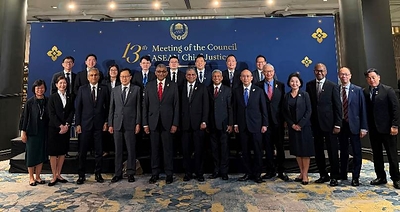
SINGAPORE, Aug. 31, 2026 /PRNewswire/ -- The Singapore Judiciary, led by The Honourable the Chief Justice Sundaresh Menon, participated in the 15th ASEAN Law Association (ALA) General Assembly, 47th ALA Governing Council Meeting and 13th Council of ASEAN Chief Justices (CACJ) Meeting from 21 to 23 July 2026 in Bangkok, Thailand.
At the 47th ALA Governing Council Meeting, Justice Lee Seiu Kin presented the findings of the Crossroads 2.0 Working Group, which identified priority areas for harmonisation in commercial and trade laws, cross-border insolvency, alternative dispute resolution, specialist practice and emerging areas such as the digital economy, artificial intelligence and climate. Justice S Mohan gave an update on the Virtual Training Marketplace, a web portal that matches young lawyers with cross-border training and attachment opportunities across ASEAN member countries. It now has 24 participating firms and facilitated its first successful placement in the past year.
At the 13th CACJ Meeting, all 11 ASEAN jurisdictions discussed initiatives spanning judicial education, cross-border cooperation, technology and emerging legal issues. Key developments included the publication of the first volume of the Memorandum of Guidance on Enforcement of Money Judgments within ASEAN and a Simplified Protocol on Verification Procedure to Authenticate Court Orders within ASEAN, as well as the adoption of a Roadmap to promote the use of Therapeutic Justice and Therapeutic Justice-related practices in ASEAN. The CACJ also continued its work to revise the Governance Framework on the Use of AI for ASEAN Judiciaries. At the close of the Meeting, the CACJ recorded its deep appreciation to Chief Justice Menon for his longstanding contributions to the CACJ.
Singapore judges also contributed to several meetings held on the sidelines of the ALA and CACJ sessions. At the 4th Standing Meeting of ASEAN Insolvency Judges, participants discussed the implementation of the Model Framework for Communication and Cooperation between ASEAN Courts in Cross-Border Insolvency Proceedings and agreed on a scenario-based pilot project on judicial assistance in foreign insolvency proceedings. At the ASEAN Law Conference, Justice Aidan Xu spoke at a session on judicial responses to the use of generative AI in court submissions. ASEAN insolvency and intellectual property judges also met practitioners to exchange views on cross-border restructuring and the enforcement of intellectual property rights.
The meetings underscored the Singapore Judiciary's continued role in advancing ASEAN's efforts to deepen judicial cooperation, strengthen cross-border frameworks and develop future-ready justice systems.
 View original content to download multimedia:https://www.prnewswire.co.uk/news-releases/singapore-judiciary-strengthens-judicial-and-legal-cooperation-within-asean-in-bangkok-meetings-302864793.html

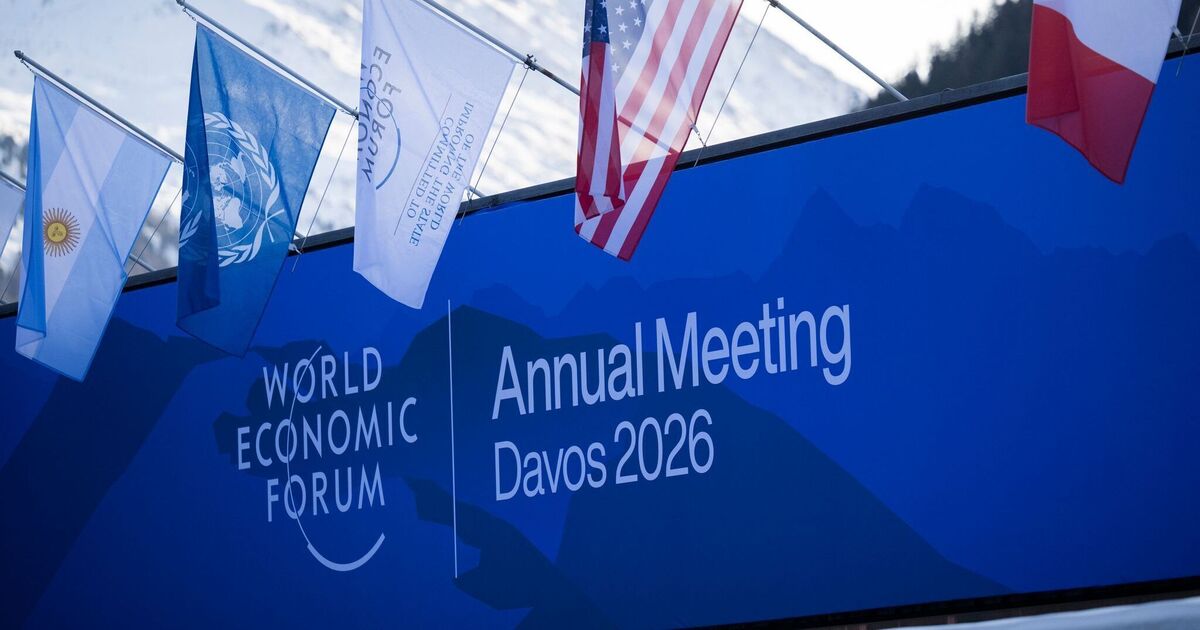
Eine anonyme E-Mail an die US-Botschaft in Bern hat kurz vor dem Auftritt von US-Präsident Donald Trump beim Weltwirtschaftsforum in Davos ein Ermittlungsverfahren der Schweizer Bundesanwaltschaft ausgelöst – und zur Festnahme einer WEF-Mitarbeiterin geführt. Inzwischen ist klar: Die gegen die IT-Expertin erhobenen Vorwürfe eines geplanten Attentats waren nicht zu belegen. Die Bundesanwaltschaft teilte mit, die in der Sache eröffneten Ermittlungen wegen strafbarer Vorbereitungshandlungen zu einem Mord seien eingestellt worden.
Die Warnmail war laut Medienberichten der Tamedia-Gruppe wenige Stunden vor Trumps Rede eingegangen. Der anonyme Absender schilderte in fehlerhaftem Englisch eine angeblich „dringliche Bedrohung“ für das Leben des US-Präsidenten in Davos und bezeichnete die später festgenommene Frau iranischer Herkunft als Agentin, die eine entsprechende Operation koordiniert habe. Die US-Botschaft leitete den Hinweis an die Schweizer Behörden weiter; diese erklärten, sie hätten die Warnung „sehr ernst“ genommen und seien „sofort aktiv“ geworden.
Tatsächlich arbeitete die Beschuldigte nicht am Tagungsort in Davos, sondern in der WEF-Zentrale im Genfer Vorort Cologny. Dort wurde sie nach Angaben der Bundesanwaltschaft festgenommen, mehrere Stunden lang bis tief in die Nacht vernommen und ihre Telefone sowie ihr Computer wurden beschlagnahmt und ausgewertet. Im Zuge dieser Maßnahmen habe sich jedoch gezeigt, dass sich keiner der in der anonymen E-Mail erhobenen Punkte erhärten ließ. Für alle Aspekte der Anschuldigungen seien keine Beweise gefunden worden, hieß es zur Begründung für die Einstellung des Verfahrens.
Die betroffene Mitarbeiterin, eine gebürtige Iranerin, war nach den Medienberichten kurz nach dem Vorfall beim WEF nicht mehr beschäftigt. Zu den Gründen äußerte sich die Organisation nicht; auf entsprechende Anfragen gab es zunächst keine Stellungnahme. Damit bleiben nach dem spektakulären Fehlalarm vorerst Fragen offen – etwa zur Herkunft und Glaubwürdigkeit des anonymen Hinweises –, während die Schweizer Strafverfolger den Fall strafrechtlich abgeschlossen haben.