LONDON, May 18, 2026 /PRNewswire/ -- Markel Insurance, the insurance operation within Markel Group Inc. (NYSE:MKL), today announced the appointment of Sebastian Rice to Head of Global Development – Trade Credit, effective immediately.
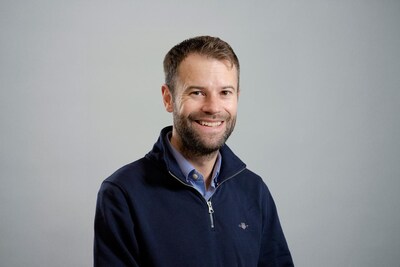
Reporting to Phil Amlot, Global Head of Trade Credit – International, Rice will work closely with him to drive innovative, solution-led underwriting and develop bespoke offerings that respond to evolving market conditions and client needs across Markel's global hubs. His role will include supporting clients navigating an increasingly complex trade environment shaped by geopolitical uncertainty, supply chain disruption and shifting credit risks.
Rice will also co-ordinate a global cohort of Trade Credit underwriters across Markel's offices in New York, Singapore, Dubai and London to align with our key partner relationships. He'll focus on business development and driving further profitable growth across the UK and Europe, with an emphasis on delivering greater capacity, tailored solutions and enhanced service for brokers and clients.
Since joining Markel two years ago, Rice has played a key role in developing new solutions, including Markel's Non-Cancellable Limits offering, which enables clients to operate with greater certainty in the event of non-payment. In his new role, he'll build on this momentum to further strengthen Markel's position as a trade credit insurer of choice for multinational businesses.
Commenting on the appointment, Amlot said: "Markel International's success and sustained growth are driven by colleagues like Seb, who are committed to working alongside our clients to deliver tailored solutions. He takes the time to understand client needs and responds with precision, rather than offering a one-size-fits-all approach.
With demand for trade credit insurance at record levels and underwriting conditions becoming increasingly complex, Seb's expertise and leadership will be invaluable as we help clients navigate increased risk and build enhanced resilience. He's already strengthened our position across the London and European markets, and I'm confident he'll bring the same discipline and commercial insight to this global role."
Rice added: "I'm proud of the profitable growth we've achieved in the London market and continental Europe since joining Markel. In a period defined by shifting supply chains and evolving economic conditions, we've focused on being a consistent and reliable partner for our brokers and clients.
This progress reflects the dedication and expertise of our underwriters. I look forward to leading the next phase of our global development and continuing to deliver solutions that support our clients' ambitions."
Rice brings more than 20 years of underwriting experience, having held roles at Euler Hermes, Atradius and QBE Europe. He joined Markel in January 2024 as Head of Business Development Europe – Trade Credit, where he strengthened the International division's non-payment protection offering across the UK and continental Europe.
About Markel Insurance
We are Markel Insurance, a leading global specialty insurer with a truly people-first approach. As the insurance operations within the Markel Group Inc. (NYSE: MKL), we leverage a broad array of capabilities and expertise to create intelligent solutions for the most complex specialty insurance needs. However, it is our people – and the deep, valued relationships they develop with colleagues, brokers, and clients – that differentiates us worldwide.

Photo - https://mma.prnewswire.com/media/2981121/Markel_Sebastian_Rice.jpg
Logo - https://mma.prnewswire.com/media/2090808/5972848/Markel_primary_Logo.jpg
 View original content:https://www.prnewswire.co.uk/news-releases/markel-international-appoints-sebastian-rice-as-head-of-global-development-trade-credit-302773539.html

In der Schweiz entscheiden die Stimmbürgerinnen und Stimmbürger am Sonntag über eine weitreichende Begrenzung der Bevölkerungszahl. Zur Abstimmung steht eine Volksinitiative der rechtskonservativen Schweizerischen Volkspartei (SVP), die den Bestand des Landes bis 2050 auf höchstens zehn Millionen Einwohner festschreiben will. Derzeit leben rund 9,1 Millionen Menschen in der Alpenrepublik, darunter etwa 340.000 Deutsche. Die Auszählung der Stimmen beginnt mittags um 12.00 Uhr, Beobachter rechnen mit einem knappen Resultat.
Die SVP, stärkste Kraft im Schweizer Parlament, vermarktet ihren Vorstoß als «Nachhaltigkeitsinitiative». Sie verspricht, mit einer Begrenzung der Zuwanderung Probleme wie Staus auf den Straßen, überfüllte Busse und Bahnen, Wohnungsknappheit, hohe Mieten und steigende Kriminalität in den Griff zu bekommen. Ab einer Schwelle von 9,5 Millionen Einwohnern müsste die Politik nach dem Willen der Initianten konkrete Maßnahmen ergreifen, etwa die Asylvergabe einschränken und den Familiennachzug begrenzen. Nach heutigen Prognosen könnte diese Marke in den 2030er-Jahren erreicht werden.
Reichen diese Einschränkungen nicht aus, sieht die Initiative als weitere Option die Kündigung der vertraglich geregelten Personenfreizügigkeit mit der Europäischen Union vor. Das Abkommen ermöglicht Bürgern aus EU-Staaten bislang einen vergleichsweise einfachen Zugang zum Schweizer Arbeitsmarkt. Eine Aufkündigung hätte nicht nur Konsequenzen für Fachkräfte aus der EU, sondern könnte auch das Verhältnis zum wichtigsten Handelspartner des Landes belasten. Für Deutsche würde ein Ja zur Initiative den Weg zum Arbeiten und Leben in der Schweiz deutlich verkomplizieren.
Bundesrat und Regierungsparteien – mit Ausnahme der SVP – lehnen die Vorlage geschlossen ab. Die Regierung warnt davor, dass ein starrer Bevölkerungsdeckel strukturelle Probleme wie Fachkräftemangel und gesellschaftliche Überalterung nicht löse. Justizminister Beat Jans bezeichnete die Initiative als «leeres Versprechen» und verwies darauf, dass sie neue Unsicherheiten schaffe, ohne die Ursachen von Engpässen auf dem Wohnungs- und Infrastrukturmarkt anzugehen. Umfragen signalisierten lange eine Mehrheit für die Vorlage, zuletzt deutete sich jedoch eine Trendwende an. Angesichts früherer Volksabstimmungen, bei denen die tatsächlichen Ergebnisse zum Teil deutlich von den Erhebungen abwichen, bleibt der Ausgang jedoch offen.