LONDON, May 21, 2026 /PRNewswire/ -- Markel Insurance, the insurance operation within Markel Group Inc. (NYSE:MKL), today announced the appointment of Danny O'Donoghue to Head of Fine Art & Specie, effective immediately.
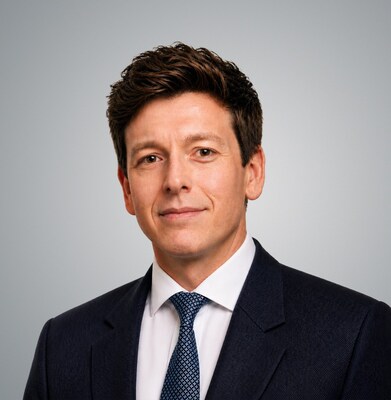
In his new role, O'Donoghue will be responsible for leading the strategic and sustainable expansion of Markel's Fine Art & Specie portfolio to further enhance the organisation's position in London as a leading Fine Art & Specie insurer. His principal duties will include identifying, assessing and underwriting complex risks across four key areas – Fine Art, Specie, Jewellers Block and Cash in Transit – while supporting underwriters in his team with their professional development.
Alongside these duties, O'Donoghue will foster broker relationships and work closely with Markel's Claims and Actuarial functions, where he'll keep abreast of industry developments, ensuring coverage remains tailored for broker partners and insureds. Furthermore, he'll identify collaborative opportunities across the business' international Fine Art & Specie teams to enhance broker service levels and drive further profitable growth.
O'Donoghue will be based in London, reporting to Dan McCarthy, Director of Marine at Markel International.
McCarthy commented: "Rising asset values, a surge in high-profile thefts and more frequent natural catastrophes are creating new risks while intensifying existing exposures for galleries, jewellers and private collectors. Danny's achievements are underpinned by an entrepreneurial mindset, which will be critical as we continue to deliver best-in-class underwriting services, support and standards to our brokers and clients.
"We're delighted to have someone of Danny's caliber join Markel's Fine Art & Specie team here in London. With his significant expertise in managing and scaling large Fine Art Specie portfolios, we're confident he'll be able to take ours to new heights, elevating our leadership position in the London Market."
O'Donoghue said: "I'm delighted to be joining Markel in my new role as Head of Fine Art & Specie. Opportunities like this don't come around often, but Markel really stood out to me. I saw strong cultural alignment, a clear and unified proposition and a well-defined strategic direction – all of which I believe are essential building blocks to continue growing the team and portfolio for years to come.
"I'm excited to drive the continued expansion of Markel's lead specialist capabilities across the Fine Art & Specie market and support our brokers and clients across an evolving and complex risk landscape."
O'Donoghue possesses more than 15 years' underwriting experience, spending 13 of them specialising in Fine Art & Specie insurance. Previously, he was employed at Talbot as Head of Fine Art & Specie, where he led global strategy and execution for Fine Art & Specie across Lloyd's Syndicate 1183 and AIG company platforms. Prior to this position, he worked at Aspen for more than 10 years as a Senior Fine Art & Specie Underwriter.
About Markel Insurance
We are Markel Insurance, a leading global specialty insurer with a truly people-first approach. As the insurance operations within the Markel Group Inc. (NYSE: MKL), we leverage a broad array of capabilities and expertise to create intelligent solutions for the most complex specialty insurance needs. However, it is our people – and the deep, valued relationships they develop with colleagues, brokers and clients – that differentiates us worldwide.

Photo - https://mma.prnewswire.com/media/2984338/Markel_Danny_ODonoghue.jpg
Logo - https://mma.prnewswire.com/media/2090808/Markel_primary_Logo.jpg
 View original content:https://www.prnewswire.co.uk/news-releases/markel-appoints-danny-odonoghue-to-head-of-fine-art--specie-for-its-london-operations-302777951.html

Die Einigung zwischen den USA und dem Iran auf ein Rahmenabkommen zur Beendigung des Iran-Kriegs sorgt in der Handelsschifffahrt für vorsichtige Erleichterung. Besonders im Fokus steht die Straße von Hormus, eine der wichtigsten Seepassagen für den weltweiten Öl- und Flüssiggas-Handel. Seit Beginn des Konflikts Ende Februar ist die Meerenge weitgehend blockiert, zahlreiche Handelsschiffe sitzen im Persischen Golf fest. Nun soll die Passage nach der geplanten Unterzeichnung des Abkommens wieder geöffnet werden.
US-Präsident Donald Trump kündigte an, dass die Straße von Hormus nach dem Abschluss der Vereinbarung wieder für den Verkehr freigegeben werden solle. Die Unterzeichnung ist für Freitag in Genf vorgesehen. Für die deutsche Handelsschifffahrt wäre dies ein entscheidender Schritt zur Normalisierung. „Die Signale aus den Gesprächen zwischen den USA und dem Iran machen auch der Schifffahrt Hoffnung“, sagte Martin Kröger, Hauptgeschäftsführer des Verbands Deutscher Reeder (VDR). Zugleich mahnte er, es müsse sich erst zeigen, ob die Passage dauerhaft sicher befahrbar sein werde. Man sei „vorsichtig optimistisch“.
Die Branche hat allen Grund, auf rasche Entspannung zu hoffen. Nach Angaben des VDR sitzen aktuell noch 46 Schiffe deutscher Reedereien mit rund 1.000 Seeleuten im Persischen Golf fest. Die Blockade der Meerenge trifft nicht nur die Reedereien, sondern bremst den globalen Energiehandel. Die UN-Sonderorganisation für Seeschifffahrt (IMO) begrüßte die Einigung ausdrücklich. Seit Ausbruch des Konflikts wurden der IMO zufolge 46 Angriffe auf Handelsschiffe in der Region bestätigt, bei denen 14 Seeleute ums Leben kamen.
Trotz der diplomatischen Fortschritte sehen Branchenverbände die Lage in der Region weiter kritisch. Der internationale Schifffahrtsverband Bimco bewertet die Sicherheitslage in der Straße von Hormus auch nach Bekanntwerden des Rahmenabkommens als instabil. Eine Durchfahrt bleibe sehr riskant, heißt es aus dem Verband. Für Reeder und Charterer stellt sich damit die Frage, wie schnell und in welchem Umfang sie ihre Routen wieder über die Meerenge führen können – oder ob Ausweichrouten zumindest mittelfristig bestehen bleiben müssen.
Für den Moment überwiegt in der Schifffahrt die Hoffnung, dass die geplante Vereinbarung in Genf die Voraussetzungen für eine nachhaltige Entspannung an einem der neuralgischsten Punkte des globalen Seehandels schafft. Ob und wie schnell sich die Zahl der festliegenden Schiffe reduziert und sich die Risikoeinschätzungen der Versicherer und Verbände anpassen, dürfte entscheidend dafür sein, wann sich der Verkehr durch die Straße von Hormus wieder weitgehend normalisiert.