SINGAPORE, July 21, 2026 /PRNewswire/ -- Planning a holiday can be exciting, but arriving at a destination often brings a different reality. An unfamiliar language, endless menus you don't understand, complicated train systems and long queues at attractions can quickly turn travel excitement into travel stress.
Travellers are no longer just looking for places to stay and flights to book. Increasingly, they want smarter tools that help them navigate the moments in between. Trip.com removes these barriers through a range of tech-savvy tools and destination services designed to make travelling easier, faster, and more intuitive - many of them powered by TripGenie, Trip.com's in-app AI travel assistant.
Too many choices? Let AI do the planning
Researching destinations, opening endless browser tabs and trying to fit everything into a schedule can quickly become overwhelming.

Trip.Planner helps travellers create personalised itineraries based on travel style, trip duration and preferences, helping users spend less time organising and more time enjoying the journey.
Whether travelling solo, with a family or with friends, Trip.Planner can help turn inspiration into a practical travel plan in seconds.
Unsure what to order? Let the menu speak your language
Ordering food abroad can sometimes feel like a leap of faith. Multiple restaurant menus in different languages can be difficult to decipher, and travellers may miss local specialities simply because they do not know what they are.

TripGenie's Menu Assistant tool helps travellers scan menus and understand dishes instantly, making it easier to discover local flavours and order with confidence.
Turn conversations into connections
Some of the most memorable travel moments happen through interactions with local people, whether it is chatting with a market vendor, asking a local for recommendations, or learning more about a destination from someone who calls it home.
But language barriers can limit those experiences. TripGenie's Live Translation feature helps travellers communicate in real time, making conversations feel more natural and helping users engage more confidently with the people around them.
With TripGenie, travellers can move beyond transactions to create more meaningful cultural connections and experiences.
Every attraction has a story, even if you cannot read the sign
Travelling often means standing in front of a landmark, museum display or cultural site and wondering exactly what you are looking at.
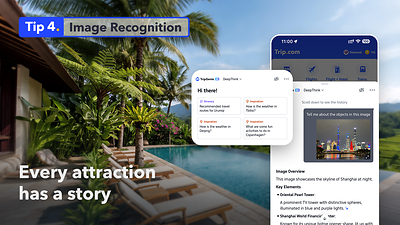
With TripGenie's Image Recognition, travellers can use their camera to identify attractions and instantly gain more information, helping them better understand the places around them.
Instead of simply taking a photo and moving on, travellers can engage more deeply with the destination and culture.
Skip the queue and spend more time exploring
Long lines and confusing ticket options can quickly eat into valuable holiday time.
Trip.com allows travellers to pre-book attractions and select suitable packages in advance, helping travellers avoid unnecessary queues and ensuring they choose the experience that best fits their needs.
Train travel made easier
Rail networks are often one of the most efficient ways to explore a destination, but they can also feel overwhelming for visitors.
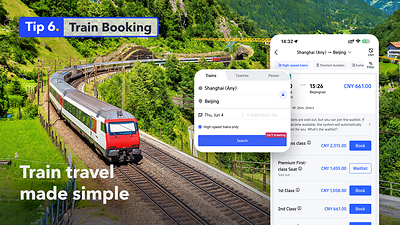
From high-speed rail in China and Japan to regional train systems across Europe, travellers often need to navigate unfamiliar booking processes and ticket types.
Trip.com simplifies the experience by allowing users to easily book train tickets and access regional rail passes, airport express services, and flexible ticketing options across Europe and Asia, including the UK, France, Germany, Spain, Italy, Japan, China, South Korea, and more.
Travel with support when you need it most
Even the best planned trips can come with unexpected moments. A delayed flight, a missed connection, or the need for emergency help while navigating an unfamiliar destination can quickly add stress to a journey.
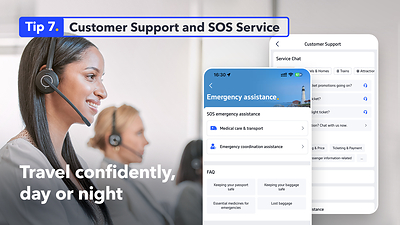
Trip.com's 24/7 customer support helps travellers access assistance whenever and wherever they need it, ensuring support remains available across different time zones and throughout every stage of the journey. Alongside this, Trip.com's SOS features provide an additional layer of reassurance, helping travellers access support more quickly in unexpected situations.
Travel should feel exciting, not overwhelming
Technology is increasingly changing what travellers expect from their journeys. Beyond simply booking flights and hotels, travellers are now looking for support throughout the entire experience, from planning and discovery to navigation and assistance.
Trip.com's growing ecosystem of tools and services reflects a broader shift in travel behaviour, helping travellers spend less time worrying and more time enjoying the moments that matter.
Download Trip.com and start navigating holidays with confidence and peace of mind wherever you go.
About Trip.com
Trip.com is an international one-stop travel service provider, available in 27 languages across 48 countries and regions in 44 local currencies. Offering an extensive hotel and flight network of more than 1.7 million hotels and flights from over 680 airlines, along with over 350,000 in-destination activities, Trip.com covers 3,500 airports in 220 countries and regions. Trip.com's world-class 24/7 multilingual customer service helps to 'create the best travel experience' for its millions of customers worldwide. To book your next trip, visit Trip.com.

 View original content to download multimedia:https://www.prnewswire.co.uk/news-releases/lost-in-translation-overwhelmed-by-choice-how-tripcom-helps-you-navigate-any-destination-302829460.html

Die Schweiz stimmt an diesem Wochenende über eine der umstrittensten Initiativen der vergangenen Jahre ab: „Keine 10-Millionen-Schweiz!“. Der Vorstoß der nationalkonservativen Schweizerischen Volkspartei (SVP), auch bekannt als Schweizerische Volkspartei oder Swiss People's Party, sieht vor, die ständige Wohnbevölkerung des Landes bis 2050 auf maximal zehn Millionen Menschen zu begrenzen. Nach ersten Hochrechnungen tendieren die Stimmbürgerinnen und Stimmbürger dazu, die Initiative abzulehnen – ein Ergebnis, das im Vorfeld keineswegs sicher schien.
Die Initiative, die in der Verfassung verankert werden soll, würde den Bund verpflichten, Gegenmaßnahmen zu ergreifen, sobald die Bevölkerung 9,5 Millionen erreicht. Die Schweiz zählte Ende 2025 bereits gut 9,1 Millionen Einwohner – rund 1,7 Millionen mehr als 2002. Haupttreiber des Wachstums ist die Zuwanderung. Rund 28% der im Land lebenden Menschen besitzen keinen Schweizer Pass. Viele stammen aus EU-Staaten wie Italien, Deutschland und Portugal, hinzu kommen Personen aus Drittstaaten, darunter Asylsuchende.
Unterstützer der Initiative argumentieren, das Land stoße an seine Belastungsgrenzen. Sie verweisen auf steigende Mieten, überlastete Verkehrswege, Staus sowie eine als problematisch wahrgenommene Entwicklung bei Gewalt und Kriminalität, die sie mit einer höheren Zuwanderung verknüpfen. Ziel sei es laut Kampagnenmotto, „zu bewahren, was wir lieben“. Die SVP wirbt mit auffälligen Aufklebern, Fahnen und Plakaten in Nationalfarben, um eine Begrenzung des Bevölkerungswachstums als Schutz der Lebensqualität zu präsentieren.
Gegen die Initiative stellen sich der Bundesrat, das Parlament, die Kantone sowie die meisten übrigen großen Parteien, gestützt von Wirtschaftsverbänden und Gewerkschaften. Sie warnen, ein starres Bevölkerungs- und damit faktisches Zuwanderungslimit könne den bereits bestehenden Arbeitskräftemangel verschärfen. Laut Bundesamt für Statistik waren im ersten Quartal 2026 rund 1,87 Millionen ausländische Erwerbstätige in der Schweiz beschäftigt. Etwa vier von fünf kamen aus EU- oder EFTA-Staaten oder dem Vereinigten Königreich, der Rest aus Drittstaaten. Viele arbeiten in Bereichen wie Gesundheitswesen, Bau und Gastgewerbe – Sektoren, die stark auf Personal aus dem Ausland angewiesen sind.
Ein weiterer Konfliktpunkt ist das Verhältnis zur Europäischen Union. Die Initiative sieht vor, dass die Schweiz in letzter Konsequenz das Abkommen über die Personenfreizügigkeit mit der EU kündigen müsste, sollte die Obergrenze sonst nicht zu halten sein. Gegner befürchten, dies könnte die bilateralen Beziehungen und den Zugang zum europäischen Arbeitsmarkt belasten. Befürworter halten dem entgegen, nur mit klaren quantitativen Vorgaben lasse sich der Druck auf Wohnungsmarkt, Infrastruktur und öffentliche Dienste nachhaltig begrenzen.
Parallel zur Abstimmung über die 10-Millionen-Grenze entscheiden die Stimmberechtigten auch über eine Verschärfung des Zivildienstgesetzes. Im Fokus der innenpolitischen Debatte steht jedoch vor allem die Frage, wie die Schweiz Wachstum, Wohlstand und gesellschaftlichen Zusammenhalt künftig austarieren will. Das Ergebnis der Volksabstimmung dürfte zwar die Initiative selbst klären, die Grundsatzdiskussion über Zuwanderung, Arbeitskräftebedarf und Lebensqualität in der Alpenrepublik jedoch kaum beenden.