LONDON, Oct. 15, 2026 /PRNewswire/ -- New research by IBM (NYSE: IBM) finds that AI-related incidents are reaching boardrooms across Europe and the Middle East among the organizations surveyed, but governance capabilities and risk accountability are not keeping pace with adoption of the technology.

Eight in ten executives surveyed say an AI-related incident – including an agent failure, data exposure, AI-driven decision error, or AI security breach – reached their board or C-suite in the past year. Yet fewer than half (40%) of those organizations cite a change to AI governance policy or framework in response.
When the pace of deploying AI outstrips governance and compliance frameworks readiness, rather than pause while governance adapts, the majority (56%) of executives surveyed report pressing ahead within agreed risk limits. Just a third delay deployment entirely until their governance is ready.
The survey, of more than 3,200 senior executives at organizations across eight countries in Europe and the Middle East, suggests governance policies will be tested further as AI agents take on more autonomous work. Thirty-five percent of respondents say they are running agentic AI in production today, yet three-quarters expect AI agents to have some level of autonomy towards decisions by 2027. Only 37% say their current governance system is designed to scale with agentic AI deployment.
Ana Paula Assis, IBM Senior Vice President and Chair, EMEA and APAC, said: "The AI debate has moved from adoption to governance and accountability. As organizations progress from AI assistants to autonomous agents, governance can no longer be treated as a compliance exercise. It has become a business requirement and value enabler.
The enterprises that can scale AI with accountability and trust will be postitioned to realize business value. That means governance must be built into how agents operate, with clear boundaries on what they can do, clear ownership when things go wrong, and controls that work in real-time."
Accountability & liability gap
Nearly all executives (98%) surveyed have formally assigned responsibility for AI risk at board level, including 26% with a dedicated board-level AI committee. Yet the research found no clear consensus on accountability for adverse outcomes from AI agents. An organization's CIO or CTO was the most frequently cited role with assigned responsibility for adverse outcomes from AI agents, selected by just 17% of all respondents.
Respondents' views on legal liability when an AI system causes significant harm were also divided: 20% say it should be shared proportionally between deployer and vendor, 19% say there should be a regulatory framework that does not yet adequately exist, and 14% say it should sit with the AI vendor or technology provider.
To manage increasingly autonomous AI agents making decisions without human approval at each step by 2027, executives expect to need formal legal or contractual frameworks defining AI vendor liability for agent failures (33%), defined human escalation thresholds (32%), real-time monitoring and audit trails of agent decisions and actions (30%) and the ability to immediately halt agent activity across the enterprise (29%).
Other key findings include:
Study methodology
The research was conducted by Censuswide on behalf of IBM among 3,221 executive management respondents, including C-level, at organizations with 1,000 or more employees in the UK, France, Germany, Italy, Spain, the Netherlands, Saudi Arabia and the UAE. The data was collected between 14 and 24 September 2026.
About IBM
IBM is a leading provider of global hybrid cloud and AI, and consulting expertise. We help clients in more than 175 countries capitalize on insights from their data, streamline business processes, reduce costs and gain the competitive edge in their industries. Thousands of government and corporate entities in critical infrastructure areas such as financial services, telecommunications and healthcare rely on IBM's hybrid cloud platform and Red Hat OpenShift to affect their digital transformations quickly, efficiently and securely. IBM's breakthrough innovations in AI, quantum computing, industry-specific cloud solutions and consulting deliver open and flexible options to our clients. All of this is backed by IBM's long-standing commitment to trust, transparency, responsibility, inclusivity, and service. Visit www.ibm.com for more information.
Media contact:
Gregor Hastings
IBM EMEA Communications
gregor.hastings@ibm.com

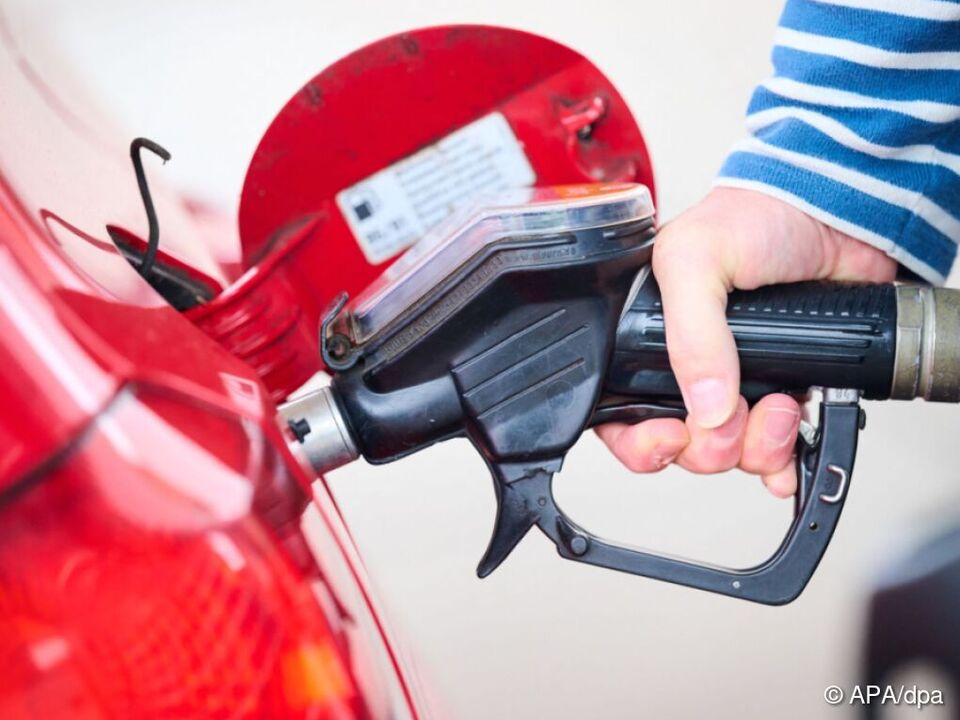
Während die Dieselpreise in Teilen Italiens neue Höchststände erreichen, zeichnet sich in Luxemburg eine spürbare Entspannung ab – und in Deutschland profitieren Autofahrer nur eingeschränkt von Steuererleichterungen. In Südtirol kletterte der Dieselhöchstpreis in Bozen Medienberichten zufolge auf 2,288 Euro pro Liter und lag damit am Mittwoch über dem Durchschnitt auf den italienischen Autobahnen. Dort wurden im Schnitt 2,287 Euro pro Liter Diesel fällig. Im gesamtstaatlichen Vergleich ist Südtirol damit weiterhin Spitzenreiter bei den Preisen.
Auch in anderen italienischen Regionen zogen die Dieselpreise deutlich an. In Trient stieg der Selbstbedienungspreis auf 2,274 Euro pro Liter, ein Anstieg um 1,1 Cent binnen eines Tages. Die stärksten Preissprünge wurden jedoch nicht in den teuersten Regionen verzeichnet, sondern im Nordosten und im Westen des Landes: In Friaul verteuerte sich ein einmaliges Volltanken von 50 Litern Diesel um 1,25 Euro, in Ligurien um 1,20 Euro, im Latium um 1,15 Euro. Auf den Autobahnen wurden Tagesanstiege von bis zu zwei Cent je Liter registriert. Der Präsident der nationalen Verbraucherunion, Massimiliano Dona, wirft der Regierung in Rom vor, zu wenig gegen die Preisanstiege zu unternehmen, und warnt vor möglichen Folgen für die Inflation.
Parallel dazu zeigt sich in Luxemburg ein gegenteiliger Trend. Dort wird Diesel nach Angaben des Wirtschaftsministeriums ab Mitternacht um 6,2 Cent je Liter günstiger und kostet dann 1,995 Euro. Damit fällt der Preis unter die Marke von zwei Euro. Die Benzinsorten Super 95 und Super 98 bleiben stabil bei 1,837 Euro beziehungsweise 2,049 Euro je Liter. Auch Heizöl wird in Luxemburg billiger: Bei Abnahme von mindestens 1.500 Litern sinkt der Literpreis am Mittwoch ebenfalls um 6,2 Cent auf 1,477 Euro. Der Großherzogtum bewegt sich damit preislich klar unter dem Niveau vieler Regionen in Italien.
In Deutschland wiederum kommt eine bereits beschlossene Steuerentlastung für Autofahrer nur begrenzt an. In Sachsen-Anhalt senkte die Bundesregierung vor rund einer Woche die Steuern auf Kraftstoffe um 17 Cent pro Liter. Laut dem Portal Benzinpreis-blitz kostete Super E10 am Mittwochnachmittag im Landesdurchschnitt 2,12 Euro pro Liter und damit lediglich rund sieben Cent weniger als am Nachmittag vor Inkrafttreten des Rabatts. Der Dieselpreis lag bei 2,19 Euro pro Liter, rund 15 Cent unter dem Vorkrisenniveau. Die Entlastung erreicht damit nicht vollständig die angekündigte Höhe, zudem spielt laut den Erhebungen die Uhrzeit eine wesentliche Rolle: Je nach Tageszeit fällt der Vorteil für Verbraucher unterschiedlich aus.
Im europäischen Vergleich entstehen damit deutliche Preisunterschiede für Dieselverbraucher. Während Italien mit Rekordständen in Teilen des Landes und spürbaren Tagesanstiegen im Fokus steht, nutzt Luxemburg den Spielraum für Preissenkungen. Deutschland versucht, über Steuersenkungen gegenzusteuern, bislang mit begrenzter Durchschlagskraft an der Zapfsäule. Für Verbraucher bleibt das Umfeld volatil – und die Frage, in welchem Umfang staatliche Eingriffe und Marktbewegungen künftig tatsächlich im Portemonnaie der Autofahrer ankommen.