SUZHOU, China, May 25, 2026 /PRNewswire/ -- GCL System Integration (GCL SI) joined partners and stakeholders at Getz Energy's "Getz Energy Open House: Welcome to the Smart Energy Revolution" to explore trends in large-scale solar deployment and smart energy integration as Thailand accelerates renewable energy development.
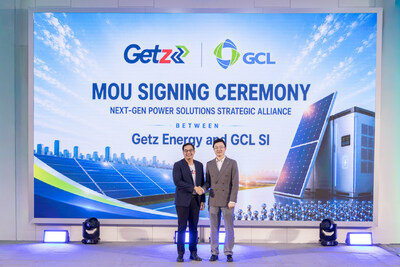
At the event, GCL SI and Getz Energy Company Limited (Getz), a wholly-owned subsidiary of Global Power Synergy Public Company Limited (GPSC), signed a Memorandum of Understanding (MOU) covering the planned supply of up to 1 GW equivalent of photovoltaic modules over the next three years, supporting the expansion of solar generation capacity in Thailand.
The agreement aligns with GPSC's long-term renewable energy strategy while strengthening Getz Energy's role in Thailand's growing clean energy market through utility-scale solar projects and intelligent energy management solutions. The partnership also reinforces both companies' focus on next-generation solar technologies and regional energy infrastructure development.
Under the agreement, GCL SI will supply its photovoltaic modules and battery energy storage systems for large-scale solar and hybrid solar applications. Deliveries are expected to be phased to match construction and grid connection schedules, ensuring timely module supply throughout project execution.
Showcasing Advanced Module Technologies at Getz Open House
At the exhibition, GCL SI showcased several flagship products, including the SiRo T Series NT12/66GDF module, as well as the SiRo B Series NR12R/66GDF and NR10R/54BGDF modules. Corresponding solar cells were also displayed alongside the modules, giving visitors a closer look at GCL SI's latest cell technologies and manufacturing capabilities.
Designed for utility-scale and industrial applications, the SiRo T series integrates advanced TOPCon 2.0 technology, bifacial power generation capability, enhanced operational stability, and long-term durability to support reliable energy output under demanding real-world operating conditions. Optimized for industrial rooftops, large-scale solar installations, and high-temperature environments, the series is engineered to deliver stable, cost-effective performance across the project lifecycle.
Meanwhile, the SiRo B Series, built on GCL's advanced GPC technology, combines high conversion efficiency with enhanced visual integration for premium distributed solar applications. Featuring ultra-low reflectivity films, high-purity FBR granular silicon, and advanced passivation technologies, the series is engineered to deliver strong performance while maintaining a refined visual profile.
Expanding Renewable Energy Cooperation Across Southeast Asia
For Getz and GPSC, the power and energy flagship of the PTT Group, the agreement supports the continued growth of their renewable energy portfolio, with utility-scale solar serving as a key component of the group's long-term low-carbon generation strategy.
For GCL SI, the MOU further strengthens its presence in Southeast Asia's solar market and reinforces its position in Thailand's renewable energy market. The agreement also reflects the company's growing role in meeting regional demand for higher-efficiency photovoltaic technologies used in large-scale solar applications.
More broadly, the partnership highlights the rapid growth of utility-scale renewable energy development across Southeast Asia, where rising electricity demand, grid modernization, and decarbonization targets are driving investment in next-generation solar infrastructure.
Photo - https://mma.prnewswire.com/media/2986839/20260522094401_44_1123.jpg
 View original content:https://www.prnewswire.co.uk/news-releases/gcl-si-and-getz-energy-sign-mou-for-1-gw-of-advanced-pv-modules-to-support-thailands-clean-energy-transition-302780966.html

Postauto treibt den Einsatz autonomer Fahrzeuge in der Ostschweiz voran und bereitet nach eigenen Angaben Europas grösstes Robo-Taxi-Netz vor. Das Bundesamt für Strassen (Astra) hat dem Unternehmen eine Ausnahmebewilligung erteilt, damit die speziell ausgerüsteten E-Autos im St. Galler Rheintal sowie in den Kantonen Appenzell Ausserrhoden und Appenzell Innerrhoden automatisch verkehren dürfen. Seit dem 1. Juni sind die Fahrzeuge in einem rund 80 Quadratkilometer grossen Gebiet unterwegs – vorerst noch zu Testzwecken und mit Sicherheitsfahrerinnen und -fahrern an Bord.
Herzstück des Projekts ist die Flotte von bis zu 25 sogenannten "AmiGo"-Fahrzeugen, die im Endausbau mit Automatisierungsgrad Level 4 fahren sollen. Postauto kooperiert dafür mit Apollo Go, der Robotaxi-Sparte des chinesischen Technologiekonzerns Baidu. Die Fahrzeuge werden im typischen Postauto-Gelb lackiert und elektrisch betrieben. Während der Testphase dürfen die Sicherheitsfahrer ihre Hände vom Lenkrad nehmen; sie können jedoch jederzeit eingreifen, wenn die Situation es erfordert – etwa an unübersichtlichen Verzweigungen oder bei forsch auftretendem Gegenverkehr.
Im Alltagstest auf einer festgelegten Route in Altstätten (SG) zeigt sich das System laut Projektbeteiligten bereits weitgehend stabil, auch wenn der Fahrkomfort in Kurven noch nicht an einen menschlichen Chauffeur heranreicht. Auffällig ist das sehr defensive Verhalten, etwa vor Fussgängerstreifen, wo das Fahrzeug früh abbremst, selbst wenn sich Personen noch in einiger Entfernung befinden. Gesteuert wird der Betrieb zusätzlich aus einer Leitstelle, in der Operatorinnen und Operatoren die Fahrten überwachen und bei Bedarf aus der Ferne eingreifen können.
Der reguläre Betrieb mit fahrerlosen Fahrzeugen ist ab 2027 vorgesehen. Postauto plant, dass Fahrgäste in der Region ihre autonome Fahrt dann probeweise per App buchen können. Astra-Direktor Jürg Röthlisberger sieht im automatisierten Fahren eine grosse Chance und spricht dem Projekt das Potenzial eines "Gamechangers" zu. Es ist nicht der erste Versuch mit selbstfahrenden Fahrzeugen in der Schweiz, aber nach Umfang und Einsatzgebiet der bislang weitreichendste. Die Technologie soll schrittweise verfeinert und insbesondere für ländliche Regionen erprobt werden, in denen flexible, bedarfsgesteuerte Angebote die bestehende Grunderschliessung ergänzen könnten.