BEIJING, Sept. 20, 2026 /PRNewswire/ -- This is a report from china-asean-media.com.
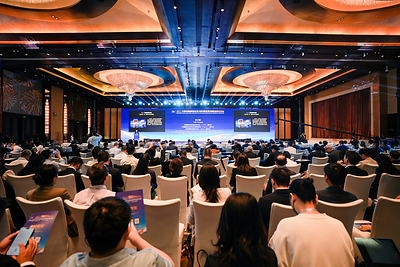
On September 18, the China Arbitration Summit 2026 & China High-level Dialogue on Maritime and Commercial Arbitration was held in Beijing. The event was jointly hosted by the China International Economic and Trade Arbitration Commission (CIETAC), the China Maritime Arbitration Commission (CMAC), the United Nations Commission on International Trade Law (UNCITRAL), and the All China Lawyers Association (ACLA). Nearly 390 representatives from 41 countries and regions attended in person, while online coverage attracted more than 5.14 million views from 55 countries and regions.
In his remarks, Nie Wenhui, Vice Chairman of the China Council for the Promotion of International Trade (CCPIT), called for innovation in arbitration theory, institutions, practice, and culture, as well as rules responsive to contemporary needs, technology-enabled services, and an open and inclusive arbitration ecosystem.
Gao Xiaoli, Vice President of the Supreme People's Court and Justice of the Second Rank, said Chinese courts have worked to foster an "arbitration-friendly" judicial environment through judicial interpretations, annual reports, and joint training for arbitrators and judges. She added that courts would continue improving judicial review of arbitration and supporting its role in international commercial dispute resolution.
Anna Joubin-Bret, Secretary of UNCITRAL, noted that the forum coincided with the 60th anniversary of UNCITRAL and the 70th anniversary of CIETAC. She commended CIETAC's participation in UNCITRAL discussions on issues including electronic arbitral awards and artificial intelligence in arbitration.
CIETAC also released the CIETAC Belt and Road International Arbitration Typical Cases, comprising 12 representative cases involving disputes across multiple regions and sectors, including mining, rail transit, port trade, energy infrastructure, engineering projects, and enforcement of awards.
The commission also signed cooperation agreements with arbitration institutions from Africa, Kyrgyzstan, and Vietnam, covering joint events, information sharing, arbitrator recommendations, and hearing facilities.
Under the theme "International Arbitration in a Changing World," more than 30 Chinese and international experts discussed arbitration order, governance, and core values. The forum was the flagship event of the 14th China Arbitration Week, which featured 77 seminars across 40 cities in 10 countries and regions from September 15 to 21.
 View original content to download multimedia:https://www.prnewswire.co.uk/news-releases/china-arbitration-summit-2026--china-high-level-dialogue-on-maritime-and-commercial-arbitration-successfully-held-in-beijing-302883971.html

Eine anonyme E-Mail an die US-Botschaft in Bern hat kurz vor dem Auftritt von US-Präsident Donald Trump beim Weltwirtschaftsforum in Davos ein Ermittlungsverfahren der Schweizer Bundesanwaltschaft ausgelöst – und zur Festnahme einer WEF-Mitarbeiterin geführt. Inzwischen ist klar: Die gegen die IT-Expertin erhobenen Vorwürfe eines geplanten Attentats waren nicht zu belegen. Die Bundesanwaltschaft teilte mit, die in der Sache eröffneten Ermittlungen wegen strafbarer Vorbereitungshandlungen zu einem Mord seien eingestellt worden.
Die Warnmail war laut Medienberichten der Tamedia-Gruppe wenige Stunden vor Trumps Rede eingegangen. Der anonyme Absender schilderte in fehlerhaftem Englisch eine angeblich „dringliche Bedrohung“ für das Leben des US-Präsidenten in Davos und bezeichnete die später festgenommene Frau iranischer Herkunft als Agentin, die eine entsprechende Operation koordiniert habe. Die US-Botschaft leitete den Hinweis an die Schweizer Behörden weiter; diese erklärten, sie hätten die Warnung „sehr ernst“ genommen und seien „sofort aktiv“ geworden.
Tatsächlich arbeitete die Beschuldigte nicht am Tagungsort in Davos, sondern in der WEF-Zentrale im Genfer Vorort Cologny. Dort wurde sie nach Angaben der Bundesanwaltschaft festgenommen, mehrere Stunden lang bis tief in die Nacht vernommen und ihre Telefone sowie ihr Computer wurden beschlagnahmt und ausgewertet. Im Zuge dieser Maßnahmen habe sich jedoch gezeigt, dass sich keiner der in der anonymen E-Mail erhobenen Punkte erhärten ließ. Für alle Aspekte der Anschuldigungen seien keine Beweise gefunden worden, hieß es zur Begründung für die Einstellung des Verfahrens.
Die betroffene Mitarbeiterin, eine gebürtige Iranerin, war nach den Medienberichten kurz nach dem Vorfall beim WEF nicht mehr beschäftigt. Zu den Gründen äußerte sich die Organisation nicht; auf entsprechende Anfragen gab es zunächst keine Stellungnahme. Damit bleiben nach dem spektakulären Fehlalarm vorerst Fragen offen – etwa zur Herkunft und Glaubwürdigkeit des anonymen Hinweises –, während die Schweizer Strafverfolger den Fall strafrechtlich abgeschlossen haben.