In the news release, Basecamp Research raises $140M to advance AI-designed therapeutics, issued 23-Sep-2026 by Basecamp Research over PR Newswire, we are advised by the company that information has changed in the first bulleted subheadline and in the fourth paragraph. The complete, corrected release follows:
LONDON and BOSTON, Sept. 23, 2026 /PRNewswire/ -- Basecamp Research, a frontier AI company developing AI-designed medicines, today announced a $140M Series C financing to train a new generation of EDEN models and advance a pipeline of AI-designed therapeutics towards clinical development.

Basecamp's ambition is to develop cures for diseases that remain incurable by designing medicines that reprogram the body to repair itself. The company combines frontier AI models trained on proprietary biological data with technology for writing DNA sequences into cells.
"We believe the future of medicine lies in reprogramming the body to repair itself. We design the models and the medicines to teach it how," said Glen Gowers, co-founder and CEO of Basecamp Research. "AI-based approaches promise to change what's possible for patients who currently have few alternatives. This funding brings this technology closer to those who need it most."
The oversubscribed round was led by S32, with participation from Menlo Ventures' Anthology Fund, Catalio Capital Management, European Tech Collective, Firebrand River Capital, Inception Fund, King Philanthropies, NATO Innovation Fund, NVIDIA, PostScriptum, Redalpine, The Rockefeller Foundation, Singular, Sovereign AI and True Ventures.
Additional investment comes from senior leaders from across pharma, biotech, and global industry, including André Hoffmann, Vice-Chairman of Roche, who said: "The biotechnology revolution that began fifty years ago transformed how we make medicines. Personalised, AI-designed therapeutics represent the next transformation of that journey. Basecamp Research has built the full platform to deliver it, from biological data to trained models to designed therapies. This will be key in helping the industry to continue to innovate."
Applying EDEN to develop new therapies
Basecamp Research is applying EDEN, its biological foundation model, to in vivo cell therapy – reprogramming a patient's cells inside the body. Today's cell therapies are limited both in the complexity of what they can deliver and by a manufacturing process that costs hundreds of thousands of dollars per patient.
By pairing EDEN's ability to design long and complex DNA sequences with large serine recombinases that can precisely integrate them into the genome, Basecamp's platform aims to underpin the future of cell therapies, making them more sophisticated, more customisable and simpler to administer. This has the potential to transform how we treat cancer, autoimmune disease, and more.
The company has demonstrated strong preclinical results across multiple modalities and disease areas. To expand its pharmaceutical partnerships, Basecamp has appointed Richard Pearce, formerly of Biogen, as Chief Business Officer.
Andy Conrad, General Partner at S32 and former CEO of Google's Verily, who joins the Board of Directors, said: "AI is opening up new possibilities across every part of society, but perhaps nowhere is the potential more meaningful than in human health. The ability to combine AI, biological data and scientific insight could transform how we understand disease, discover medicines and ultimately improve and extend people's lives. Basecamp Research is building an important technology platform at the center of that opportunity."
The AI and data powering Basecamp Research's therapies
At the centre of Basecamp Research's AI platform is the Trillion Gene Atlas, the world's largest proprietary biological AI training dataset. Built with partners including NVIDIA, Anthropic, PacBio and Ultima Genomics, the Atlas draws on biological data collected through access and benefit-sharing partnerships in more than 30 countries across all seven continents.
Trained on this data, the company's EDEN models recognise patterns across a huge breadth of previously unseen biology. Unlike AI systems developed for a single scientific task, EDEN models aim to deliver a universal understanding of how DNA works across all of life.
This means that the models can generate potential therapeutic candidates directly from information about a disease, an approach already demonstrated through Basecamp's collaboration with Anthropic on Claude Science. The EDEN models' capabilities include designing cell and gene therapies, enzymes and peptides.
About Basecamp Research
Basecamp Research trains frontier AI models for therapeutic design. The EDEN models are trained on the Trillion Gene Atlas, the world's largest proprietary genomic dataset, collected through partnerships in more than 30 countries worldwide. Its pipeline of EDEN-designed therapeutics, beginning with in vivo cell therapy, is advancing towards clinical development. Basecamp Research is headquartered in London with offices and labs in Cambridge, MA.
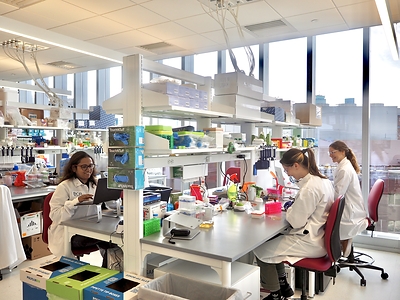

 View original content to download multimedia:https://www.prnewswire.co.uk/news-releases/basecamp-research-raises-140m-to-advance-ai-designed-therapeutics-302887620.html

Während die Dieselpreise in Teilen Italiens neue Höchststände erreichen, zeichnet sich in Luxemburg eine spürbare Entspannung ab – und in Deutschland profitieren Autofahrer nur eingeschränkt von Steuererleichterungen. In Südtirol kletterte der Dieselhöchstpreis in Bozen Medienberichten zufolge auf 2,288 Euro pro Liter und lag damit am Mittwoch über dem Durchschnitt auf den italienischen Autobahnen. Dort wurden im Schnitt 2,287 Euro pro Liter Diesel fällig. Im gesamtstaatlichen Vergleich ist Südtirol damit weiterhin Spitzenreiter bei den Preisen.
Auch in anderen italienischen Regionen zogen die Dieselpreise deutlich an. In Trient stieg der Selbstbedienungspreis auf 2,274 Euro pro Liter, ein Anstieg um 1,1 Cent binnen eines Tages. Die stärksten Preissprünge wurden jedoch nicht in den teuersten Regionen verzeichnet, sondern im Nordosten und im Westen des Landes: In Friaul verteuerte sich ein einmaliges Volltanken von 50 Litern Diesel um 1,25 Euro, in Ligurien um 1,20 Euro, im Latium um 1,15 Euro. Auf den Autobahnen wurden Tagesanstiege von bis zu zwei Cent je Liter registriert. Der Präsident der nationalen Verbraucherunion, Massimiliano Dona, wirft der Regierung in Rom vor, zu wenig gegen die Preisanstiege zu unternehmen, und warnt vor möglichen Folgen für die Inflation.
Parallel dazu zeigt sich in Luxemburg ein gegenteiliger Trend. Dort wird Diesel nach Angaben des Wirtschaftsministeriums ab Mitternacht um 6,2 Cent je Liter günstiger und kostet dann 1,995 Euro. Damit fällt der Preis unter die Marke von zwei Euro. Die Benzinsorten Super 95 und Super 98 bleiben stabil bei 1,837 Euro beziehungsweise 2,049 Euro je Liter. Auch Heizöl wird in Luxemburg billiger: Bei Abnahme von mindestens 1.500 Litern sinkt der Literpreis am Mittwoch ebenfalls um 6,2 Cent auf 1,477 Euro. Der Großherzogtum bewegt sich damit preislich klar unter dem Niveau vieler Regionen in Italien.
In Deutschland wiederum kommt eine bereits beschlossene Steuerentlastung für Autofahrer nur begrenzt an. In Sachsen-Anhalt senkte die Bundesregierung vor rund einer Woche die Steuern auf Kraftstoffe um 17 Cent pro Liter. Laut dem Portal Benzinpreis-blitz kostete Super E10 am Mittwochnachmittag im Landesdurchschnitt 2,12 Euro pro Liter und damit lediglich rund sieben Cent weniger als am Nachmittag vor Inkrafttreten des Rabatts. Der Dieselpreis lag bei 2,19 Euro pro Liter, rund 15 Cent unter dem Vorkrisenniveau. Die Entlastung erreicht damit nicht vollständig die angekündigte Höhe, zudem spielt laut den Erhebungen die Uhrzeit eine wesentliche Rolle: Je nach Tageszeit fällt der Vorteil für Verbraucher unterschiedlich aus.
Im europäischen Vergleich entstehen damit deutliche Preisunterschiede für Dieselverbraucher. Während Italien mit Rekordständen in Teilen des Landes und spürbaren Tagesanstiegen im Fokus steht, nutzt Luxemburg den Spielraum für Preissenkungen. Deutschland versucht, über Steuersenkungen gegenzusteuern, bislang mit begrenzter Durchschlagskraft an der Zapfsäule. Für Verbraucher bleibt das Umfeld volatil – und die Frage, in welchem Umfang staatliche Eingriffe und Marktbewegungen künftig tatsächlich im Portemonnaie der Autofahrer ankommen.